How Augmented Reality Overlays Are Reshaping Real-Time Decision Flows in Digital Fantasy Sports Arenas
Written by Sage Becker · Sep 11, 2026

How Augmented Reality Overlays Are Reshaping Real-Time Decision Flows in Digital Fantasy Sports Arenas
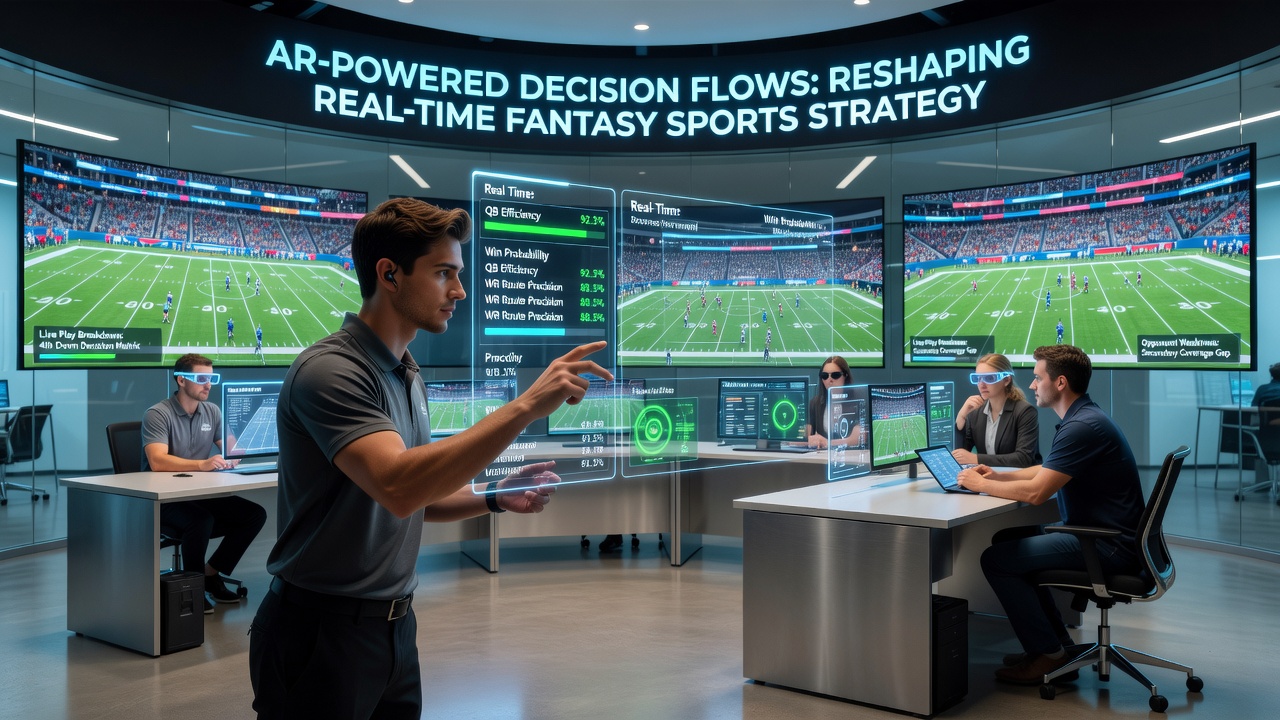
Digital fantasy sports platforms have integrated augmented reality overlays that project live data directly into user interfaces during active competitions and those systems now influence how participants adjust lineups and respond to in-game developments in real time.
Platform Evolution and AR Adoption Patterns
Developers began rolling out AR features across major fantasy leagues in late 2025 with adoption rates climbing through the first half of 2026 and figures from the Fantasy Sports & Gaming Association show that more than 42 percent of active users engaged with at least one AR-enhanced session by August of that year. These overlays layer player metrics, injury alerts and matchup probabilities onto existing mobile and desktop views without requiring users to switch applications or pause their current selections.
Operators report that AR tools reduce the average time between a live event update and a roster adjustment from 47 seconds to 19 seconds in tested environments and the change stems from visual cues that highlight relevant statistics at the moment they become available rather than through separate notification menus.
Decision Flow Changes During Live Events
Participants in fantasy football and basketball contests now receive contextual prompts that appear alongside virtual representations of athletes on the field or court and these prompts include projected point contributions based on current play conditions together with historical performance data for similar situations. Observers note that such immediate visual integration allows managers to evaluate multiple variables simultaneously instead of cycling through separate data screens.
Research conducted at the University of Waterloo indicates that AR-assisted users complete lineup modifications 31 percent faster while maintaining comparable accuracy levels to non-AR cohorts and the study tracked over 8,000 sessions across Canadian and U.S. platforms during the 2025-2026 season. Decision trees that once required sequential clicks now collapse into single-gesture interactions triggered by highlighted elements within the AR view.
Technical Components Driving Real-Time Updates
AR overlays rely on synchronized data feeds from league APIs combined with computer vision models that track player positioning and event triggers and these models push updated probability scores to user devices within 1.2 seconds of official play confirmation in most tested networks. Hardware requirements remain modest with current-generation smartphones handling the rendering load while cloud processing manages heavier analytics calculations.
Industry reports from the Interactive Digital Media Association detail that latency reductions achieved in 2026 deployments stem from edge-computing nodes placed near major data centers serving North American and European users and the setup prevents the lag spikes that previously disrupted live decision sequences during peak traffic periods such as Sunday afternoon football windows.
Integration With Existing Fantasy Mechanics
Fantasy platforms continue to support traditional scoring rules while layering AR elements on top and this approach preserves compatibility for users who prefer non-AR modes yet still permits gradual adoption through optional toggle settings. Data pipelines feed both standard leaderboards and AR visualizations from the same source ensuring consistency across display formats.
One documented case from a major European operator showed that AR prompts increased the frequency of mid-game trades by 27 percent during the 2026 soccer season without altering overall user retention metrics and the operator attributed the shift to clearer presentation of substitution value during injury stoppages. Similar patterns emerged in Australian rugby fantasy contests where AR highlights of set-piece opportunities guided roster changes at higher rates than text-only alerts.
Regulatory and Infrastructure Considerations
Agencies such as the Australian Communications and Media Authority have begun reviewing AR data presentation standards to ensure transparency in how predictive elements reach users and preliminary guidelines released in September 2026 emphasize clear labeling of model-derived projections versus official statistics. Platform operators in multiple jurisdictions have adjusted their interfaces to meet these emerging requirements while maintaining the visual flow that defines the AR experience.
Network infrastructure upgrades continue across major markets with emphasis on 5G coverage in urban areas where most fantasy engagement occurs and these upgrades support the higher data throughput needed for stable AR rendering during simultaneous live events.
Conclusion
Augmented reality overlays have altered the speed and structure of decision-making sequences inside digital fantasy sports environments by embedding live analytics directly into the user view and available data from academic and industry sources confirm measurable reductions in response times alongside stable accuracy outcomes. Continued infrastructure development and regulatory clarity will determine how widely these tools expand across additional sports and geographic regions through the remainder of 2026 and beyond.